
13 of the Best Dog Breeds for Autism in 2026
Updated on November 3, 2026Few bonds are stronger than the relationship between a child and their dog, especially when the four-legged companion serves as a shield and trusted protector.
Some autistic children form strong bonds with a family dog. In a 2025 survey of 101 dog-owning parents who attended a specialist Family Dog Service, 75.2% reported better mood and 70.3% fewer anxiety-related behaviors in their autistic children. A different study in the Journal of Pediatric Nursing reported that 67% of participating families owned dogs and 94% reported that their children were bonded to their dogs.
If you’ve decided to add a dog to your family for your child, you may be wondering, “What breed of dog is best for autism?”
The best dog for an autistic child depends on the individual dog and your child’s needs. Consider barking, energy, grooming, size and your child’s comfort around dogs, and arrange a supervised introduction before deciding. A breed description is a starting point, not a guarantee of temperament or safety.
Here’s a list of the top 13 dog breeds for a child with autism:
Golden Retriever
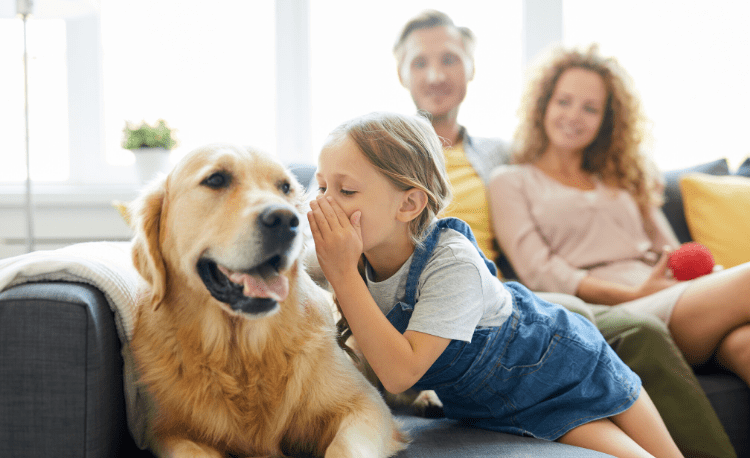
No list of family-friendly dogs would be complete without the Golden Retriever. This traditional breed is a top choice for service dogs of any variety and families with special needs children, specifically for children with autism spectrum disorder. Their happy-go-lucky personality, combined with a constant need to please their owners, makes Golden Retrievers an excellent choice for families with an autistic child. Gentle, patient, loving, and loyal Golden’s have great personalities making them incredibly easy to train. This gentle breed has a calm temperament and decent intelligence, which is why they’re often trained as emotional support or therapy dogs. Simply put, if you’re looking for a forever friend who can have a significant impact on your child, look no further than the Golden Retriever.

Saint Bernard
Most may recognize this gentle giant from the 1992 Box-Office hit Beethoven, but for the purposes of this list, the Saint Bernard has made it to the top of our lineup for his disciplined demeanor. The Saint Bernard is exceedingly gentle despite its large size. Although this breed might have a bit of a stubborn nature, Saint Bernards are also patient, gentle, and sweet with small children, making them an excellent option for families with autistic children. These dogs are loyal and simple tasks are a breeze for them. Saint Bernards are well suited to work as therapy dogs, but due to their large size, it would be difficult for them to be service dogs full-time as they may unintentionally overpower a small child.

Labradoodle
Bred as a cross between a Poodle and a Labrador, the Labradoodle is a popular choice for families of children with autism. Since most breeds on this list may shed excessively, Labradoodles or Goldendoodles are great options for those who don’t want a lot of excess hair around the house. Labradoodle coats and shedding vary, and no dog can be guaranteed allergy-friendly. If allergies are a concern, seek individual advice and spend time with the dog before deciding. This playful pooch comes in all sizes and colors, and they are rarely a 50-50 split of each breed, commonly resembling one more than the other. Either way, Labradoodles make great family dogs and are easy to train because of their high levels of intelligence. Thanks to these favorable characteristics, they are also a popular choice for therapy dogs. If you do go for this breed, be sure to account for brushing time and grooming costs.

Collie
Lassie, is that you!? This loyal breed is the quintessential family dog, and their innate intelligence, along with their eagerness to please make them easy to train as therapy dogs for autistic children. Mild-mannered, gentle, and good with kids, the Collie has been bred to be highly aware of human emotions, which is an important trait for parents considering a dog for a child on the spectrum. This elegant breed is naturally playful but still needs supervision and secure outdoor boundaries, making Collies the perfect match for newbie dog owners.

German Shepherd
If a protector is what you’re looking for, then a German Shepherd is the dog for your family. Highly regarded as one of the smartest canines, German Shepherds are usually the first choice when it comes to recruiting for military and private security. German Shepherds are generally very focused and do not get distracted easily. Because of this, they will listen to their owner intently and can handle complicated tasks. Although they are cautious with strangers, German Shepherds are gentle and loyal. They can easily keep up with a kid’s energetic nature or tone down as needed.

Bernese Mountain Dog
Bernese Mountain dogs are another great family-dog breed. Their combination of size, calm temperament, and intelligence makes them especially practical as companions for a child with ASD. Bernese Mountain dogs are both eager to please and easy to train, not to mention their heartwarming presence that could put a smile on anyone’s face. They love being of service, and they are pretty sensitive, which means they need plenty of love and affection. This exchange of love will help foster an even stronger bond between pup and kid. Unfortunately, the breed is known for drooling and heavy shedding, which some families may find off-putting. Both of these, however, are minor issues for such otherwise-awesome dogs.
Samoyed
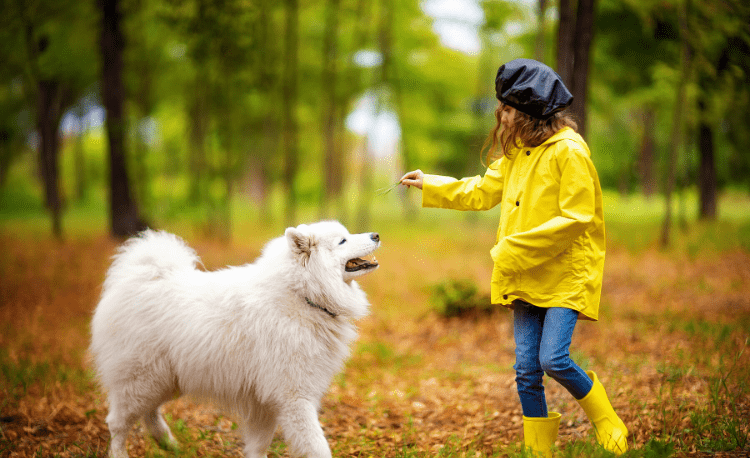
The Samoyed is an intelligent dog that is easy to train and eager to please, making them the perfect companion for your entire family, especially for a child on the spectrum. Fluffy and fun-loving, the Samoyed is one of those breeds that always look like they’re smiling. Just know that they can be highly energetic, so daily exercise and rigorous training are both a must.

Newfoundland
Believe it or not, this massive breed is another breed some families consider for an autistic child. They are very friendly and easy to train, not to mention incredibly intelligent. Despite their size and imposing look, Newfoundlands are one of the sweetest breeds on this list. While they may be large, Newfoundlands aren’t particularly active dogs, so only consider adopting one if your child is less-energetic. Usually used as therapy canines for children with mood disorders and autism, this breed’s long history of serving children with special needs is a major assurance to parents. This fluffy pooch deserves very serious consideration by parents of children with autism.

Beagle
While Beagles may not be ideal for all kids with autism spectrum disorder, they may be precisely what some other families need. Unlike the other gentle giants on this list, Beagles usually max out at about 30 pounds! Rarely intimidating to anyone, this compact breed will often greet every person they encounter with a wagging tail and smiling expression. They are playful, loving, and gentle but beagles can be pretty vocal dogs as well. Their barking may be irritating to some kids, so be sure to take that into account especially if your child has sound sensitivities. Beagles are also independent by nature, so training them can be a bit challenging. They are smart dogs, but they care less about doing your bidding and more about playing and doing their own thing.

Staffordshire Bull Terrier
Staffordshire Bull Terriers may have a conflicting reputation, but they have proved to be docile, trustworthy, and loyal companions. Referred to as “nanny dogs,” these Terriers are naturally inclined to be gentle around small children. What better friend could any child ask for? With the proper training and care, these dogs can grow incredibly close and devoted to their families. Affectionate, playful, and outgoing, these protectors can be the perfect fit for kids with autism.

Poodle
Much like the Golden Retriever, Poodles have earned an impressive reputation as both therapy and service canines. Thanks to this breed’s keen intelligence, they can be taught to perform complex tasks when needed. Poodles come in Toy, Miniature and Standard sizes and are known for their intelligence. Their low-shedding coats may suit some households, but no dog breed is completely hypoallergenic. Due to their playful yet gentle ways, Poodles make for the ideal companions to autistic children. Empathetic by nature, poodles become attuned to their owners’ feelings and can sense negative emotions as they arise, making them the perfect emotional support dog. If you want a support dog for your kid who prefers a small and less furry breed, Poodles are your best bet.

Great Pyrenees
Good luck finding a more devoted dog than the Great Pyrenees. The Great Pyrenees are gentle but with the fiercest loyalty to their human companions. This behavior trait makes them an excellent match for kids with autism who need a guardian and a dependable companion. If properly trained, this breed can be a full-time service canine. Due to their high level of intelligence, this breed can easily be taught to answer commands and perform specific tasks. Keep in mind that the Great Pyrenees needs ample exercise each day and continuous training to ensure they are properly disciplined.
Labrador Retriever
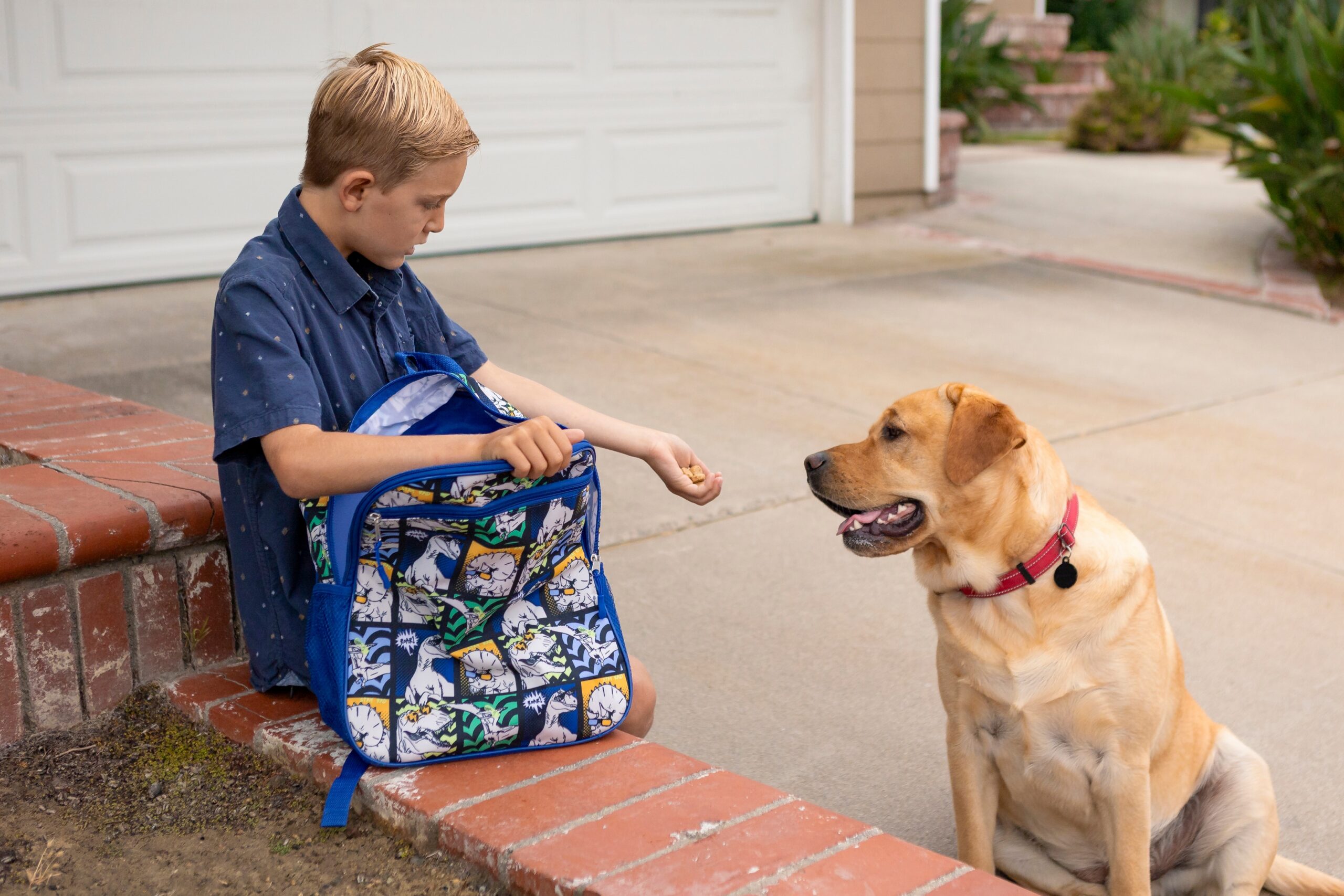
Labrador Retrievers are friendly, outgoing dogs that may suit families looking for an active companion. They need substantial daily exercise, training and attention, so consider whether their energy and size fit your child and household. As with every breed on this list, assess the individual dog rather than assuming a Labrador will suit every autistic child.
So What’s the Best Dog Breed for Autism?
It really depends on your family and child with autism. Although these breeds are worth considering as companions, other dog breeds and mixes can also be a good match. A service dog needs individual training for disability-related tasks; breed alone does not make a dog a service animal. Just make sure to do your research to find a dog with a good temperament, ability to be trained, and the right maintenance and energy level for your family. And remember, before allowing a dog in your home and around your child, it’s imperative to match your child’s personality to the dog you ultimately choose. So… Which breed stands out to you?
Maximum Safety for Autism with AngelSense
Enjoying walks and time outdoors can be part of family life with a dog. If your child also needs support with wandering or communicating when away from you, AngelSense combines proactive alerts, location monitoring and an auto-pickup speakerphone to help you stay connected. Explore how AngelSense works for your family.
Keep your child with autism safe with AngelSense!
FAQ
A family dog provides companionship. Under the US ADA, a service dog is individually trained to perform disability-related tasks. A dog providing comfort through its presence alone is not a service dog. Breed or a purchased certificate does not establish service-dog status.
Yes, a smaller dog may suit some families. Consider the individual dog’s temperament, barking and comfort with handling, as well as your child’s preferences. Smaller size alone does not make a dog calmer or safer.
No breed is completely hypoallergenic. Some low-shedding dogs, including Poodles, may be easier for some households to manage, but reactions vary. Discuss allergies with an appropriate clinician and meet the individual dog before making a commitment.
Walking the dog can be a meaningful step toward independence. Start by practicing a short, familiar route together and agreeing on how your child can ask for help. Gradually adjust the support you provide to suit your child’s skills, the dog’s behavior and the surroundings.
AngelSense can help you stay connected as your child takes on more responsibility. You can follow their location in the caregiver app, receive relevant alerts and use the auto-pickup speakerphone to offer reassurance or guidance when needed. Explore how AngelSense supports greater independence.
Get peace of mind from AngelSense, the groundbreaking AI-based assistive technology designed to enhance safety and peace of mind for individuals with special needs and their families. Our solution ensures you stay connected with your loved ones, empowering a higher level of independence while maintaining safety. Learn more about how AngelSense can make a difference for your family.
[…] 13 Best Dog Breeds for Autism Children & Families …www.angelsense.com › blog › best-d… […]
Really helpful list on the best breed for people with autism. Appreciate your warning at the end about
a family’s need to research the dog breed/mix they are interested in. Too many people impulsively chose a dog for their special needs child without making certain it is the right fit for their family, then give up the dog later because it did not fit their family’s needs.
Sandra ReesBowen@itissaid
I have a four year old that has autism and he loves dogs I am trying to see what I need to do to try to get him a dog he is a very emotional person and he is learning how to speak
Would love to talk to someone about getting a dog for my son that has speech apraxia and dealing with teenage hormones?
We have a mixed-breed Kangal from Turkey. (Kangals are very closely related to American “Anatolian Shepherd Dogs” here in the States.) We adopted her at 9 months old, and she is OUTSTANDING with my son. When he’s off his meds, he might pull at her ears, lay his head too hard on her stomach, trap her in his room, and she never does so much as make the slightest sound at him. In fact, I read one internet sources saying that Kangals are used as “Autism Dogs” in Turkey. I’d sure like to know more about that.
Could you tell me the best place I can look for a service dog for my grandson he is 7
omg i have bad bad bad bad bad autism but my mum wont allow a theraphy dog even though i know it will help me loads.
Thanks so much for the information I know have a couple of new breed to look at for my daughter
I’d like to add Havanese to this list!
Try AngelSense Risk Free
Session Changed
Your session has changed. Please close this tab.