Back-to-School Safety Checklist for Autistic Students
Updated on September 9, 2026Back-to-school time for people with autism naturally brings a mix of excitement and uncertainty. After a summer of familiar routines, returning to school means adjusting to new schedules, teachers, classrooms, transportation, and a busy environment filled with unfamiliar sights, sounds, and transitions. For an autistic student, all of these changes at once can make the autism school transition feel overwhelming—and can create additional safety challenges along the way.
The good news? A little preparation before the first day can go a long way. This back-to-school safety checklist for autistic students walks parents and caregivers through the key things to think about ahead of time, from daily routines and transportation to communication, sensory needs, wandering risks, and emergency planning. With the right plan in place, you can help make the return to school feel more predictable, manageable, and safe for your child.
Review the School Routine Before Day One
The first rule of any autism school safety plan is to give yourself a good head start. Long before the first day of school, you and your child should make up your own autism back-to-school checklist that covers the following:
- The daily schedule, including times for recess, lunch, and (if relevant) period end and start times
- Classroom location(s); if you are lucky enough to have a cooperative school staff, you should go and visit the school before the first day
- Teachers, administrators, and therapists with whom your child will be working this year
- Transportation routines, including arrival/departure times and important locations (also advisable to visit beforehand)
Predictability, i.e., knowing what comes next, is key to lowering anxiety and cognitive load for autistic students. One of the best ways to help your child understand the upcoming change is through visual schedules, which clearly lay out the daily timeline, accompanied by photos where possible. Several days before school starts, get your child used to sleeping and waking according to their school schedule so they are well adjusted on their first day.
Make School Transportation Safer
Transportation is one of the most important components of a school safety plan for autistic children. There are many modes here, including:
- School buses
- Walking
- Car rides and carpools
- Public transportation services
Each has its own risks and rewards. For instance, public transportation can be confusing for a person with autism, but it gives your child experience that is important for independence.
Regardless of the autism school transportation method you choose, there are some critical best practices that apply to all. You and your child should visit exact pickup/drop-off locations and discuss timetables. Go over transportation apps that provide routes and schedules, if your child knows how to use them. In the case of school buses, communicate with drivers and staff about your child’s condition, and meet with the person who is authorized to receive them. For maximum autism school bus safety, you’ll want to know where your child is at all times, when they are on the move, and when they’ve arrived at their destination. A vital tool here is a GPS tracker for autistic children (more about this later).
Check Communication and Identification
Of course, autism back-to-school safety centers on the teachers and administrators who will be caring for your child during the day. For non-verbal kids, communication poses a unique challenge, but you can make things easier by ensuring staff members know your child’s preferred communication methods in advance. Of particular value in these situations are portable Augmentative and Alternative Communication (AAC) tools, ranging from simple low-tech phrase cards to digital tablets. Check if your child’s school already prefers a particular AAC method.
When it comes to autism emergency preparedness, it’s always better to be two steps ahead. You never know what may trigger autism sensory overload at school and whether your child will be able to communicate properly in a moment of stress. Provide AAC cards with your child’s emergency contact information, name, address, and caregiver information, and make sure your child always carries these.
Review Emergency Procedures with Staff
School safety for autistic students requires more organization and advocacy than merely sending ID cards to school. Autistic child emergency plans should be laid out in writing (and/or pictures), formally discussed, and reviewed periodically. Safety tips for autistic students must be part of this planning, and talked about both at home and at school–so you’ll need to go over the details directly with staff. This includes how the school handles fire drills, lockdowns, evacuations, severe weather, and other emergencies.
It’s not just about the school’s protocols, but how they handle special needs’ sensitivities in unique situations. Bring up your child’s communication, sensory, mobility, or behavioral needs with teachers. For instance, if your child is hypersensitive or hyposensitive, or at risk of wandering, they might require more attention during drills or actual emergencies. Check if the staff is aware of high-risk locations such as doors and exits through the fence; if they have sufficient and practical supervision plans; and what procedures exist in case a child goes missing.
Create a School Safety Plan
Creating a customized safety plan is useful whether or not your child’s school faces an emergency. Your at-home autism safety plan can be shared with other caretakers, like babysitters, therapists, and teachers, and should cover:
- Emergency contacts that include alternatives in case you can’t be reached, such as trustworthy relatives and friends with whom your child is familiar (make sure your kid knows that these people might pick them up in certain circumstances)
- Important behaviors or triggers, such as the kinds of stimuli that can lead to a meltdown, or a tendency towards autistic child wandering, as well as calming strategies that your child prefers that help to avoid a crisis
- Communication needs (as discussed above)
- Medical information where relevant, particularly for cases of panic
First-Week Safety Check-In
After the first week or so of school, reach out to your point of contact and ask about how your child has been doing so far. Have there been any incidents or unexpected challenges? If so, how were they handled? Was your safety planning effective? Adjust the existing plan as needed. Ask about how transportation is going, transitions between classes, sensory issues, and any wandering-related events (e.g., your child disappeared from a supervised area at some point). Having this conversation reminds teachers and administrators that you’re on the ball, and ensures that they are too.
Prepare for Sensory Overload and Anxiety
School can be overwhelming even for students without autism–with all the noise, crowds, unfamiliar elements, and ever-changing stimuli, it’s no wonder that an autistic child can get anxious, overloaded, and potentially shut down. Your child is only one of many in the hallway, and their distress might not get noticed until it reaches a critical stage. The nightmare of autism elopement at school can become a significant risk, with 33% of all wandering incidents occurring while the child is at school. And this happens even in schools that are meticulously prepared for such an event.
To reduce the risk, it’s important that teachers know how to identify early-warning sensory triggers and have a strategy in place for how to calm the student. Having familiar comfort items in their schoolbag, for example, can do wonders in a moment of crisis. Even better, see if the school is willing to set up a quiet, calming space with reduced sensory stimuli that a student can retreat to if needed.
Prepare for Wandering and Elopement
Unfortunately, autism wandering at school is a scary reality that happens all too often. Why is it so common? Gaps in supervision during transitions are often to blame, such as when kids get on and off the school bus, enter or leave school grounds, during field trips, or simply when they’re running around the playground. But wandering can theoretically happen anytime a child gets distressed; it can be triggered by movement between classes, when teachers switch in the classroom, or even a trip to the bathroom. Other triggers can be bullying behavior from other students and uncomfortable social dynamics that unfold during recess. Make sure your child’s school is aware of high-risk locations, such as doors and exits, and has a clear protocol in place for when a child goes missing.
Use Technology as an Extra Safety Layer
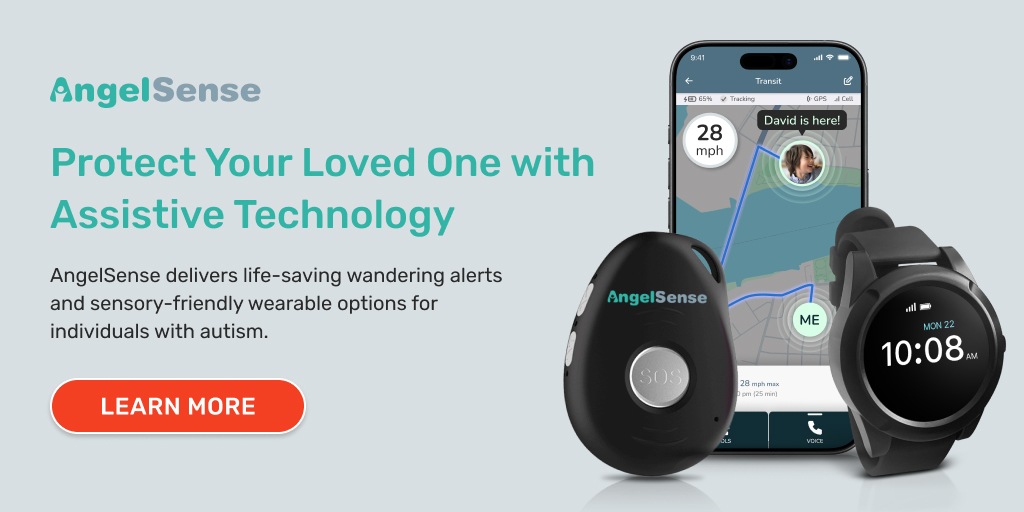
Certain risks are unavoidable and out of our hands — that’s life. But what we as parents can do is employ vital technologies to boost safety, such as a customized GPS tracker for school. Autism safety devices such as the AngelSense GPS tracker feature capabilities that include real-time location, geofencing, arrival/departure alerts, and caregiver notifications. Beyond serving as a tool for emergency situations, AngelSense provides critical communication features, including an auto-pickup speakerphone, so that caretakers can speak to the child when things go wrong. GPS trackers for school provide an additional layer of caretaker awareness as a complement to active supervision and other safety measures, particularly for children at risk of wandering.
Learn Autism School Safety the Easy Way
A little preparation can make a big difference when it comes to helping an autistic child head back to school feeling confident, supported, and safe. The strongest safety plan is one that combines several layers of protection: clear communication with teachers and staff, thoughtful planning for sensory and wandering risks, and an emergency plan that everyone understands.
Stay in close contact with your child’s school, check in regularly once the year begins, and adjust the plan as your child’s needs change. For families who want an extra layer of reassurance, AngelSense helps you stay connected throughout the school day with tools that provide insight into your child’s location, arrivals and departures, and daily routine. With the right preparation, teamwork, and support, back-to-school can be less about worrying what might go wrong and more about helping your child have a safe, successful year.
Get peace of mind from AngelSense, the groundbreaking AI-based assistive technology designed to enhance safety and peace of mind for individuals with special needs and their families. Our solution ensures you stay connected with your loved ones, empowering a higher level of independence while maintaining safety. Learn more about how AngelSense can make a difference for your family.