Best GPS Autism Trackers in 2026
Updated on March 22, 2026 Listen to the PodcastIn 2026, GPS tracking technology has become an essential part of autism safety planning — especially for families navigating the very real risk of wandering. With studies showing that nearly half of autistic children may wander at some point, having immediate access to your loved one’s location is no longer a luxury; it’s a necessity. The best GPS autism trackers in 2026 do far more than place a dot on a map. Today’s devices combine real-time location updates, instant alerts, intelligent geofencing for autism, and communication tools that are specifically designed with sensory sensitivities and caregiver needs in mind.
As autism safety GPS technology continues to evolve, parents and caregivers have more options than ever before. From wearable systems built specifically for autism to adaptable smart devices with tracking capabilities, the market for GPS trackers for autistic children has expanded significantly. But not all trackers offer the same level of reliability, responsiveness, or autism-specific support. In this guide, we’ll break down the top GPS autism trackers on the market, explain what sets them apart, and help you determine which solution best fits your child’s unique safety needs.
What Is an Autism Tracking Device?
Autism safety technology is often powered by the Global Positioning System (GPS) to track people. Yes, it’s the same technology that supports driving and transit applications. But devices designed specifically for people with autism place more of an emphasis on safety features, sensory sensitivities, and caregiver tracking apps.
Caretakers naturally want (and need) to know where their loved one is at all times. And this ability becomes crucial when an autistic person is not where they are supposed to be. This could be due to something mundane like traffic jams or late buses. But, given the sad statistic that wandering risks affect approximately half of autistic children, you always need to be prepared for worst-case scenarios.
Core features of this technology go beyond tracking a person’s location, offering robust capabilities that prevent wandering in the first place:
- Real-time autism trackers allow you to see, via an application, exactly where a person is. Better systems offer frequent refresh rates (at least every 30 seconds when the person is in motion). In addition, it’s important for the device to switch automatically to Bluetooth or Wi-Fi when indoors because GPS sometimes fails to connect in this environment.
- Geofencing ability lets the device sense when it has exited from a certain defined area. Sometimes you need to set the area manually, but superior technologies use AI to automatically create these boundaries.
- SOS alerts for the autistic person to let you know when something has gone wrong. An advanced device will have an easy-to-use button on the device itself rather than needing to enter a code (for example). Also, you should look for additional safety measures like fall detection that give the device even more bang for the buck.
- Caregiver apps make it easy to communicate and share information with first responders, teachers, and other caretakers.
- Wearable options are a must-have for autistic people who travel, and even for those who are indoors, to assist with autism wandering prevention.
Key Features to Consider in 2026
Once you’ve found GPS autism trackers with the features you’re seeking, the next step is choosing the device that’s right for your child. Identifying the needs of an autistic person goes beyond simply their level of ASD. Caretakers and parents understand the child’s distinct personality, including their likes, dislikes, abilities, and triggers. Practical evaluation and decisionmaking in choosing a GPS tracker must take these factors into account.
Age is also an important determinant; older autistic people are more likely to travel by themselves, have a complex schedule, and face a higher risk of getting lost. If your child goes to school, it’s important to use a caregiver tracking app that can be accessed by administrators at school.
If you are looking after an autistic person who is frequently out of the house, you’ll also want a device with a long battery life. Devices that constantly report somebody’s location use up a lot of battery power, so some manufacturers program their products to transmit less often when the person is not moving.
If your child is young and spends lots of time out of doors, bear in mind that this increases the risk of wandering. Having a device with strong communication abilities is essential, because in the case of wandering or emotional distress, you can communicate via features like auto-pickup and a hands-free speakerphone.
Another vital consideration is sensory preferences, along with wearability and comfort. If your child is likely to remove a device because it irritates them, or enjoys physical activity that might knock a device off of their clothing, you should look into durable wearables that are designed for this.
Your limitations also demand consideration. If you’re not tech-savvy, you should opt for a GPS tracker and caregiver app that are easy to set up and use. It is also important to check how affordable a product is, and understand pricing models. For instance, some manufacturers provide discounts if you subscribe for a whole year in advance. Even with the life-saving ability of safety tools for autistic individuals, always look for a device with a trial period that allows sensory comfort testing and time for you to figure out if this is the right choice.
Tracker #1: AngelSense (Specialized Autism GPS System)
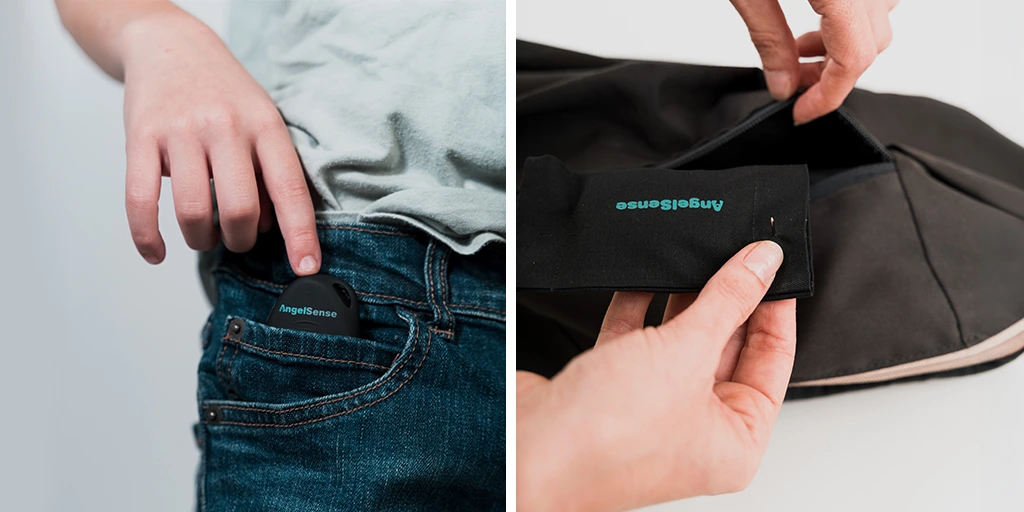
Many parents and industry experts choose AngelSense because it was built from the ground-up specifically for autistic children. You might compare it to, for example, Apple’s Air Tag, which was specifically designed to track luggage. As a dedicated assistance technology for people with autism, AngelSense addresses and solves common autism safety concerns through features like:
Secure Wearing Options
AngelSense provides a wide range of options for wearing the device, such as on a watchband, armband, lanyard, or belt clip. The device itself has rounded edges that are less likely to irritate. If your child tries to remove the tracker, other wearing options include magnetic fasteners and clothing with special pockets.
Proactive Alerts
With AngelSense, there’s no need to constantly check on the location of your loved one. The proactive system automatically notifies you whenever they are on the move and when they’ve gone outside a geofence or off their routine schedule.
Detailed Route History
Backing up the alert feature is a tracking history that shows where your loved one has been recently, making locating them during an emergency easier to do.
Caregiver Dashboards
The AngelSense app can be viewed on any mobile phone using iOS or Android. In addition, all standard web browsers allow you to access the caregiver app on your PC.
School Bus Monitoring
If your loved one is in transit, AngelSense provides vital information through features like speed detection, ETA, route history, and a live tracking map.
Specialized Support Tools
AngelSense delivers many vital features that can be lifesaving in a crisis. One of the most popular is the assistive speakerphone, which allows automatic pick-up, two-way and one-way conversations, and SOS signaling through a simple button.

Tracker #2: Wearable Smartwatch GPS Devices
Some manufacturers that developed smartwatches with tracking features have branched out from exercise and transit apps to GPS watches for autism. Again, however, this is more about finding new uses for existing technology than developing a customized product.
Popular smartwatch-style trackers have 4G/5G connectivity that enables two-way telephone communication, SOS buttons, and geofencing. They are also more durable than mobile phones, which is an option sometimes preferred by older people with autism.
Before buying one, make sure that the wearer will tolerate the device on their wrist. In addition, the small control buttons and screens of a watch can be a challenge for some. Older children and teens will likely be more comfortable with these types of devices.
Perhaps the greatest weakness of the GPS smartwatch is its short battery life, which gets worse when multiple applications are running at once (especially GPS trackers with frequent refresh rates).
Lastly, these devices often need to connect to a smartphone to function, which adds to the cost and hassle of use. And if the user is indoors, they might not have a strong signal from a cellular network or the GPS system, making it difficult (if not impossible) to track them.
Tracker #3: Long-Battery and Outdoor-Ready GPS Units
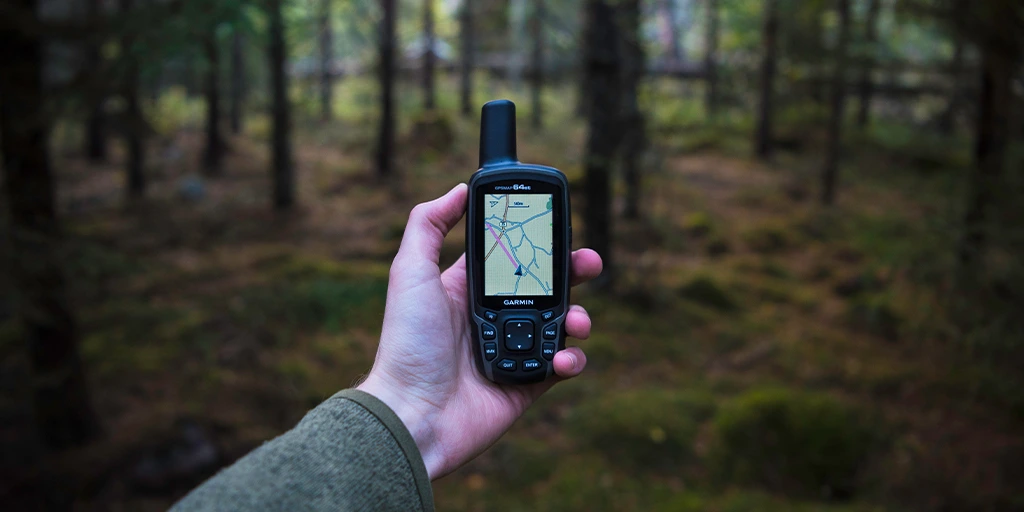
There are also wearable autism GPS devices that were originally designed for navigation and emergency alerts in tough conditions. These rugged GPS units were created for hikers, hunters, trail runners, and the military. They are resistant to falls, are often waterproof, and can be worn as a pendant, watch, on a belt, or sometimes in the form of a handheld device.
Today, mant of these devices have been adapted for active senior citizens and people with autism who are often outdoors. The units emphasize long battery life, with some models capable of recharging using solar energy. Few of them have Wi-Fi capability, and will not work without a strong satellite signal (although some connect to mobile networks).
There is a wide variety of caregiver apps that can be synced with these rugged devices. Some only provide a geofence alert, while others offer real-time tracking (including over longer distances), voice communication, travel history, and fall detection.
These outdoor-ready GPS devices might be practical for active families who like to hike and travel. But they are usually bulky, and lack the qualities of a sensory-friendly GPS tracker intended for people with autism and other sensory issues.
Tracker #4: Compact Clip-On GPS Trackers
And then there are non-wearable, clip-on GPS devices, which are essentially the opposite approach as an SOS autism tracker. These can be attached to backpacks, belts, or clothing that is modified with special pockets where the device is placed. Clip-on GPS trackers typically work with caregiver apps that can be accessed through a smartphone.
The goal of these products is to:
- Avoid triggering sensitivities
- Make removal difficult
- Resist shocks that would otherwise lead to the device falling off
- Allow attachment to things that can’t “wear” a device, such as pets and luggage
Because these are clip-on devices, they can’t be too bulky. But this also limits the size of the battery and how long it lasts. Some versions, like the Air Tag, will only respond to other Apple devices that are nearby, and so real-time updates don’t always work.
The small size also limits functionality. Many of these devices are trackers only, and don’t offer any communication functions. They typically operate via small buttons, which can be challenging for individuals with limited dexterity. While handy during short-term activities like sports, hiking, and travel, these devices are less effective for ongoing, day-to-day support.
Safety and Peace of Mind in 2026
Choosing the best GPS autism tracker is not about selecting the device with the longest feature list — it’s about finding the solution that aligns with your child’s daily routine, sensory preferences, communication abilities, and level of independence. Some families will opt for constant real-time tracking and proactive alerts. Others need strong two-way communication, durable wearables, or seamless school integration. Lifestyle, age, activity level, and caregiver tech comfort all play a role in determining which system will truly work outside of a product brochure and in everyday life.
When evaluating the best GPS autism tracker for your family, think beyond specifications and consider real-world usability. Is the device comfortable enough to be worn all day? Is the app intuitive during moments of stress? Does the company offer reliable customer service and updates as technology evolves? The right tracker should feel like a dependable safety partner — one that strengthens autism safety, supports growing independence, and gives caregivers greater confidence and peace of mind every single day.
Get peace of mind from AngelSense, the groundbreaking AI-based assistive technology designed to enhance safety and peace of mind for individuals with special needs and their families. Our solution ensures you stay connected with your loved ones, empowering a higher level of independence while maintaining safety. Learn more about how AngelSense can make a difference for your family.