Preparing Autistic Teens for College: A Practical Guide for Families
Updated on March 16, 2026 Listen to the Podcast
College is a major milestone in any young person’s life — and for autistic teens, it represents both an exciting opportunity and a meaningful leap into independence. The move from high school to higher education brings new freedoms, but also new expectations. Autistic students in college must navigate academic rigor, shifting social dynamics, and daily living responsibilities with far less built-in structure than they may be used to. And with so many changes and new responsibilities, the transition can feel both empowering and overwhelming at the same time.
That’s why preparing autistic teens for college is not about achieving perfection before move-in day — it’s about building skills, confidence, and realistic supports step-by-step. With thoughtful preparation, autistic young adults can thrive in college environments that value independence and self-direction. In this guide, we will walk you through the most important areas to address with your soon-to-be college student, including academic readiness, executive functioning strategies, social and emotional preparation, independent living skills, self-advocacy and accommodations, and campus safety planning. And remember, as a parent – it’s ok if you don’t get straight A’s along the way.
Understanding the College Transition for Autistic Students
The shift from high school to college is far more dramatic than many families expect. In high school, days are structured, supports are built in, and parents and teachers monitor progress closely. College, by contrast, requires students to manage their own schedules, track assignments independently, advocate for accommodations, and navigate unfamiliar environments with far less oversight. Executive functioning demands increase significantly, campuses can be socially and sensorily overwhelming, and even basic tasks like finding classrooms or coordinating meals add new layers of responsibility.
This is why intentional autism college preparation matters so much. Many autistic students thrive in college when they enter with realistic expectations, practiced life skills, and a clear plan for support. Considering that 55% of autistic high school students don’t go to college, it’s great news that your child wants to take on the opportunity- just be sure to prepare them for the major differences:
Daily Structure
College is fast-paced and hectic. In addition to long, successive class hours, there are a myriad of social clubs and events–and on some sprawling campuses, just finding your way to the right room can be difficult. Someone who struggles with executive functioning issues may find this environment very demanding.
Support
While it’s true that college accommodations for autism exist, they pale in comparison to what some students get in high school. Autism-friendly environments, sensory breaks, and one-on-one instruction are generally not an option in college classrooms.
Self-Management
Reduced parental oversight is another major change from high school to college life. If your child will be living on-campus, they will need to become much more self-reliant in a short time. And even if they still live at home, being on time for class, completing assignments, and preparing for exams all require a higher level of personal responsibility.
But if your autistic young adult is ready for this independence, they will join the ranks of many well-known autistic adults who have earned a mortarboard: Elon Musk, Anthony Hopkins, and Temple Grandin among them.
Building Independent Living Skills Before Move-In
The most important way to prepare your autistic teen for the college transition is by strengthening their practical life skills. In many households, it’s just a fact that parents do most of the maintenance and administration. But your child will need to function on their own when living in dorms or other student housing–especially if they’re going to be living with roommates–which is why developing independent living skills for people with autism is so crucial. You should start gradually while they’re still in high school.
When it comes to practicing life skills, begin with time management. It can be something as basic as waking up independently and going to bed on time. Once your teen signs up for college courses, you will also know their daily schedule. You might consider downloading a planning app like Tiimo to help them arrange where they need to be and when during the school day.
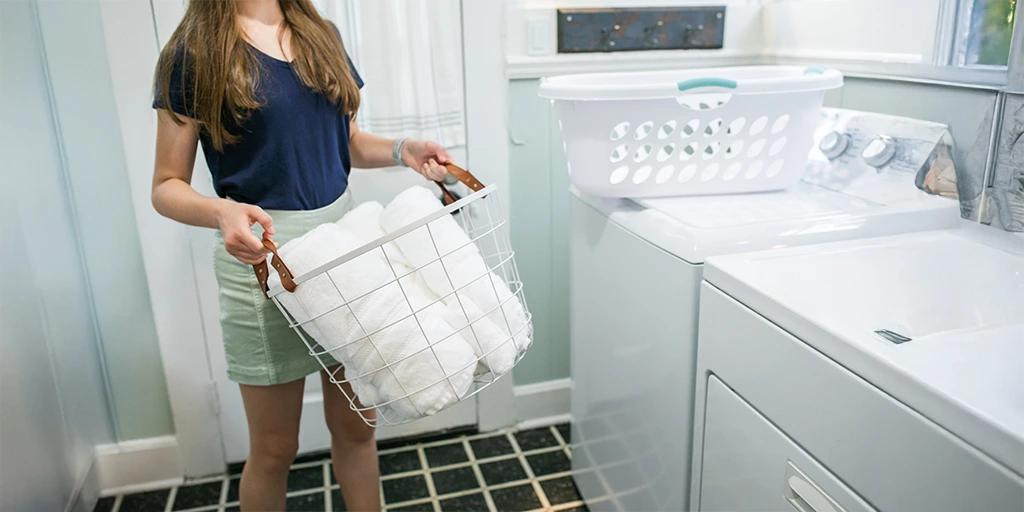
Laundry, budgeting, meal planning, and similar domestic activities can all be practiced by your teen while at home. Work with them to discuss all the things that they need to do, demonstrate how the relevant machines operate, and monitor them as they execute these household tasks for a month or so.
Plus, don’t forget to discuss maintaining essential habits, such as medication management and personal hygiene. Once they start school, check that these routines are still on track.
Social & Emotional Preparation
In college, dorm life = social life. People who live on campus often enjoy an immersive college experience and meet lifelong friends. But making the most of this situation requires delicate handling.
Be sure to discuss dorm life expectations with your teen. They should understand that their roommate will probably not have the same tidiness, personal schedule, or study habits. A good roommate dynamic includes being considerate of what the other student needs for living and studying comfortably. When a misunderstanding arises, encourage your teen to show patience and use practiced communication skills to resolve the issue.
Social transitions are incredibly important. Making friends, going to student events, and joining clubs are all common parts of campus life. But your autistic teen must balance these activities with managing unstructured time and setting boundaries as part of building healthy relationships. Make sure to warn them about exposure to alcohol and drugs, improper sexual activity, and campus misbehavior.
All of these changes, as well as college life in general, can lead to feelings of anxiety, homesickness, and burnout. It’s natural, whether one has autism or not. The pressure of studies and the hectic nature of a busy campus environment can be a lot for any 18-year-old to acclimate to. Review strategies like creating predictable routines to avoid too much socializing, and identifying quiet spaces for when your teen needs downtime. Think about preparing for the sensory challenges of a college campus by equipping your teen with their preferred tools (weighted blanket, noise-cancelling headphones, etc.).

Academic Preparation & Executive Functioning Strategies
Many new college students are a bit dazed by the shift in academic standards. The homework, frequent tests, and clear explanations that are designed to create good habits in high school tend to disappear in college. They are replaced by longer-term projects, one or two exams, and self-directed learning.
Before your autistic teen gets lost in this new system, parents can help to boost executive functioning in college. For example, there are a number of study systems, such as PQ4R and the Pomodoro Technique, for learning class material more efficiently. You can easily find online real college assignments and methods for breaking them down into manageable parts, which they can practice before the academic year begins.
It really helps students with autism to organize their academic commitments in a comprehensive way. Beyond daily schedules, college students must think ahead about the entire term so that exam preparation and assignment submissions are completed on time. The time management tools, organization systems, and digital planners described above can also be applied here. Even Harvard University has a guide about such techniques and tools.
Another key component of college academics is consultation with professors and teaching assistants. Before and during the term, you can help your autistic teen find out when instructors are available for additional help during office hours, and how to best communicate with them.
Navigating Disability Services & Accommodations
The advice of teaching assistants and professors is among the few supports that students can access when having difficulty with academic material. Unlike the IEPs of high school, where parents and the school cooperate to support the student, college disability services for those with autism rely on the student taking the initiative. Here is a brief overview of what you can expect from college support programs for autistic people:
- Responsibility for documentation requirements and the process of requesting accommodations is up to the student, who usually needs to submit a report from a psychologist or psychiatrist as proof of their claim of autism. Many colleges have on-campus evaluators who perform this function. Parents are rarely involved.
- Colleges do not adapt course material for autistic students. Instead, they can receive extended test time, note-taking support, priority registration, reduced-distraction testing rooms, human “readers” for exam material (instead of the student reading the questions directly), among many other options. Note that the type of accommodation can vary greatly between institutions.
- In a college, your child will be dealing with, for example, an office of student services, instead of a dedicated administrator who is familiar with their situation. This might mean a lack of responsiveness, inconsistent answers, and fewer avenues for making a complaint.
Despite these challenges, let’s not forget that the autism self-advocacy skills that your teen will use to get accommodations is a critical aspect of them gaining greater independence.
Considering Different College Pathways
College doesn’t mean the same thing for everyone; it’s not a one-size-fits all. When considering college readiness for autistic teens, there are many factors to take into account: the support options available, your teen’s level of independence, and of course, their goals. So, before any bags are packed, your family should think carefully about choosing the best institution for all of your teen’s needs. For example:
- Community colleges are a lower-cost alternative that are job-oriented and shorter in duration (usually two years), but which still offer the chance to obtain a four-year degree after transferring.
- Part-time enrollment allows your autistic teen to acclimatize to student life more gradually, benefit from the lower pressure of fewer courses, and work while studying.
- Going to local colleges avoids the difficulties and expense of dorm life, gives your child more time to take a break, and enables you to keep a closer eye on them.
- College programs designed for autistic students can provide your teen with an accredited degree while maintaining a standard of support that is higher than other institutions.
- Taking advantage of gap years can deliver a much-needed vacation from the pressure of college studies and a chance to focus on building the skills required for completing a degree.

Safety & Personal Responsibility on Campus
Regardless of where your teen decides to study, college safety for autistic students is a shared duty. Parents need to educate their child about campus safety with active planning, and before anything unpleasant happens.
Getting around any college campus is often challenging. Your child should understand the campus layout, so plan to visit the area before the term starts. This will give you a chance to find the main buildings, dorms, and other facilities.
If your teen will be living on campus, talk about roommate dynamics and how they can get help if something goes wrong in the dorm. Any student should also be briefed about digital safety, for instance, keeping personal data private and avoiding cyberbullying.
Similarly, establish a schedule for communication so that they get in touch with you (or vice versa) and provide updates on a regular basis. Just to be on the safe side, check that your child has a list of emergency contacts and knows how to reach local health services, on campus or off. In the dorm room, make sure that your teen knows how to store their property in a secure way.
If they will be commuting, then practice the route, perhaps together. Even if your child spends most of their time on campus, it’s always a good idea for them to have an assistive technology that can help if things go wrong.
For instance, AngelSense is a GPS-based tracker designed specifically for people with autism. It allows caregivers to instantly see where the user is located, whether they are on the road, walking on campus, or somewhere indoors. AngelSense also features valuable communication tools, including assistive two-way speakerphone, an SOS button, and AI-powered geofencing alerts.
Confidence through Preparation
College success for autistic teens is not about eliminating every obstacle — it’s about building the skills and confidence to navigate them. When preparation centers on independence, self-advocacy, and realistic supports, autistic young adults are fully capable of thriving in higher education. The goal is not for parents to manage every detail from a distance, but to gradually shift from control to coaching — offering guidance, encouragement, and a steady belief in their teen’s ability to grow. With the right preparation and practice, college can become more than an academic experience; it can be a powerful step toward lifelong capability and meaningful independence.
Get peace of mind from AngelSense, the groundbreaking AI-based assistive technology designed to enhance safety and peace of mind for individuals with special needs and their families. Our solution ensures you stay connected with your loved ones, empowering a higher level of independence while maintaining safety. Learn more about how AngelSense can make a difference for your family.