Best GPS Trackers for Autism: What Families Should Look For
Updated on February 18, 2026 Listen to the PodcastFor many families raising autistic children, one of the most persistent safety concerns is wandering. Autism locator devices have emerged as a must-have tool that protects autistic children while still allowing them the freedom to explore, learn, and grow. These wearable technologies go beyond basic tracking, offering parents a reliable way to know where their child is and to respond quickly if something goes wrong.
Modern location technology creates a safety net for both autistic children and their caregivers: it reduces uncertainty, shortens response times during emergencies, and allows children to safely participate in everyday activities like school, social outings, and travel. Just as importantly, these tools can help autistic children build confidence and life skills, knowing support is always within reach.
We’ll walk you through what parents need to know when considering the market’s best autism trackers. You’ll learn which features truly matter, how different types of devices compare, and what safety, usability, and data considerations to keep in mind. Most of all, we’ll explore how GPS safety devices for autistic children can transform daily life—minimizing anxiety while empowering children to move through the world more freely and securely.
The Most Important Feature of an Autism Locator
When choosing a locator device, ask yourself: how will this assist with autism wandering prevention? Autism and elopement safety should be front of mind, given that approximately 50% of all people with autism attempt to elope at some point. This statistic highlights why visual supervision alone is often insufficient. Many wandering cases happen even when the autistic person is under relatively strict observation. All it takes is a minute of distraction for a child to find their way outside.
Some caretakers rely simply on attaching a basic ID tag to a child. However, the very basic technology of these devices doesn’t provide a wide range of tracking capability. For instance, Apple’s AirTag depends on nearby Apple devices that need to have both location services and “Find My Network” options enabled. If your child has wandered into a remote area, or one without a sufficient number of such Apple devices, the AirTag simply does not work.
At a minimum, the autism safety device you choose must offer real-time information that delivers faster response time during emergencies.
Key Features Parents Should Look For
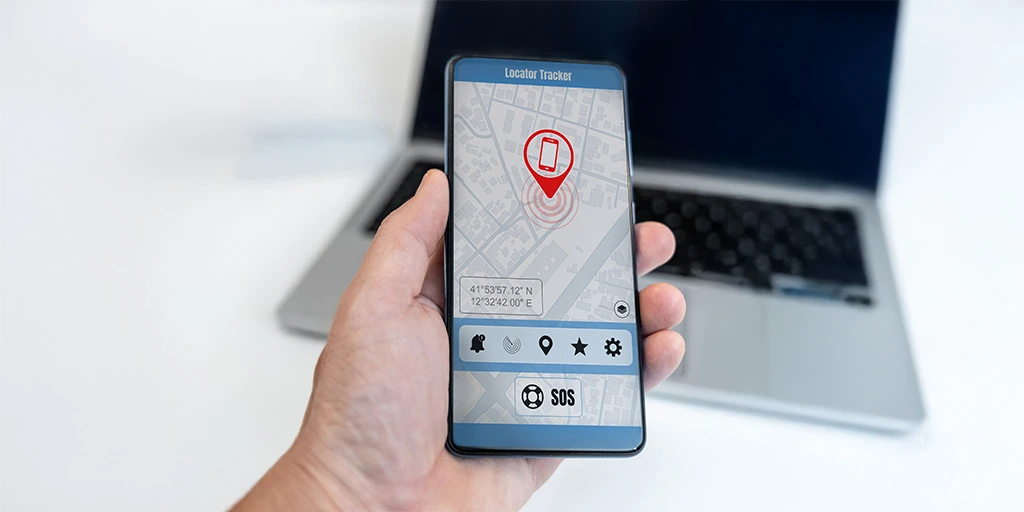
But real-time information is just the beginning – there are many other criteria you’ll want on your shopping list. Each of these features directly boosts safety, usability, and independence for autistic children:
Real-Time GPS Accuracy
All GPS technologies report on the device’s location, but the best ones are updated every few seconds (as opposed to minutes).
Geofencing Alerts
High-quality autism locators allow caregivers to set boundaries, and if the device goes out of that boundary, the interface application (for example, an app on your phone) sounds an alert. The top technologies even notify you proactively when the wearer exits an area that the system itself has identified as being “normal”.
Indoor vs. Outdoor Tracking
GPS location devices rely on satellite signals that sometimes are not available or accurate enough (for example, in a crowded mall). Leading autism trackers switch automatically to the strongest available signal, such as Bluetooth or Wi-Fi.
Battery Life
If you’ve ever used any portable device, you know that a long-lasting battery is critical. Well-designed GPS trackers for autism will power down at the right time to maximize intervals between charging.
Durability
Autism safety devices are often worn by physically active kids and therefore so need to be robust. This includes a tough casing as well as electronics that can resist constant impact.
Sensory-Friendly Wearability
Autistic people often have unique sensory needs and may be irritated by certain fabrics or objects that are not comfortable to wear. Autism trackers that are built with this in mind will minimize sharp edges and use sensory-friendly materials.
Communication Tools
Sometimes, it’s difficult for those with autism to manage small controls on mobile devices. Well-designed devices feature large control buttons, but superior products feature automatic pickup, a way to remotely activate the speaker (so you can hear what is happening in the wearer’s location), and enable two-way conversations that don’t require action on the part of the wearer.
School Compatibility
On the other hand, sometimes you don’t want a device to be available, such as during school hours. School-friendly features include the option for disabled voice communication and app/dashboard access permissions for administrators.
Data Security
Finally, your personal information and location details should only be available to approved individuals. Autism trackers use encryption technology and incorporate restrictions on who can access your data.
Types of Autism Locator Devices Compared
When you conduct an autism locator device comparison, the differences between those designed for people with special needs versus those that were not, are stark. For example, smartphone-based apps such as Life360 will give you the location of the user’s device, estimated time of arrival, and other factors related to travel. They do not provide the emergency tools that you will be thankful for if something goes wrong.
Then there are Bluetooth trackers, which are often device-dependent. The leading products in this category, Apple’s AirTag and Samsung’s SmartTag2, both rely on proprietary phones and networks to locate a tracker. And because they are meant to be small, Bluetooth tracking tags and tiles lack any other features.
GPS tracking watches, on the other hand, have many features, but these are often focused on fitness. The controls of these watches are often too small for easy manipulation, while the casing can be a drawback for wearers with sensory issues.
In comparison, autism-specific wearable devices are built to avoid all of these limitations. They are made with specialized features like tamper-proof wear and secure attachment. On the technical side, autism trackers have near-universal connectivity that provides behavior insights like tracking timeline according to personalized routines, as well as emergency tools such as caregiver coordination.
AngelSense is a leading example of this approach, as it was built specifically for autistic children and individuals with special needs. Unlike general-purpose trackers, AngelSense offers real-time GPS updates, proactive alerts, auto-pickup speakerphone with tap-to-listen, unknown-person detection, and emergency tools designed for fast caregiver coordination. With sensory-friendly wearing options and dedicated school dashboards, it delivers a level of accuracy and supervision that basic trackers and consumer wearables simply can’t provide.
Balancing Safety and Independence
All of these details boil down to one thing – your child’s autonomy. Because autism independence tools are all about striking that critical balance between freedom and safety.
There are two dimensions to this issue. First, your child needs to acquire life skills by venturing out alone, but also needs a safety net in case they run into trouble. The best autism locators are more than just emergency tools as they allow you to communicate with your child and pick them up if needed. In this way, autistic people gain the confidence to travel, learn, and work.

Second, caregivers want a solution that they can trust instead of resorting to over-monitoring. Obviously, a parent can simply prevent their autistic child from ever going out alone. But the safety features of a quality autism locator provide the best of both worlds during transitions, school days, community outings, and transportation.
In short, families with autistic children can empower growth and responsibility in their loved ones while finding peace of mind for themselves – if they use the right technology.
How Schools and Caregivers Use Locator Tools Together
It’s a similar story at schools. Teachers and administrators have a genuine interest in the wellbeing and success of special education students. Autism locators make responsibilities easier for everyone, for example by securing arrival and dismissal, field trips, recess, and communication during transitions.
Due to real-life wandering incidents at schools, high-end GPS trackers for autism enable shared app access between parents, teachers, aides, and transportation staff as an efficient and seamless way towards a quick resolution. These devices provide immediate alerts if a child leaves a designated area so that schools can take action more quickly while still maintaining the privacy of your data.

Questions Parents Should Ask Before Choosing a Locator
Not every locator device is suitable for every family, and the most expensive ones on the market don’t necessarily guarantee a foolproof solution. It’s worth taking the time to do a little research, ask the right questions, and understand exactly what you are getting for your investment. This is particularly true when it comes to features that you want on hand at any time, even without a crisis. Here are a few questions that will help you to finalize your decision:
- How accurate is the device indoors and outdoors?
- How long does the battery last?
- Is the device practical for children with tactile sensitivity?
- Who can access the tracking data?
- Does the device work during transit, and how frequent are updates?
- Is there an easy way to turn speakers off and on?
- How does the entire system work during an emergency?
Conclusion: A Device that Supports Safety, Growth, and Peace of Mind
Choosing the right autism locator is ultimately about creating a healthy balance between freedom and safety. Families want their children to explore the world, build independence, and participate in everyday life—without constant fear of wandering or emergencies. A reliable GPS tracker for autism provides that balance by offering a trusted safety net, allowing caregivers to step back when appropriate while still being ready to step in when needed.
As you evaluate your options, it’s essential to look beyond basic tracking and consider the full picture: accuracy, reliability, sensory-friendly design, data security, and how well the device supports real-life situations across home, school, and community settings. Tools like AngelSense demonstrate how purpose-built technology can empower both safety and independence. By choosing a locator that prioritizes your child’s needs while supporting caregivers with insights and communication, you can reduce daily anxiety and focus more on confidence and connection—knowing that help is always within reach.
Get peace of mind from AngelSense, the groundbreaking AI-based assistive technology designed to enhance safety and peace of mind for individuals with special needs and their families. Our solution ensures you stay connected with your loved ones, empowering a higher level of independence while maintaining safety. Learn more about how AngelSense can make a difference for your family.